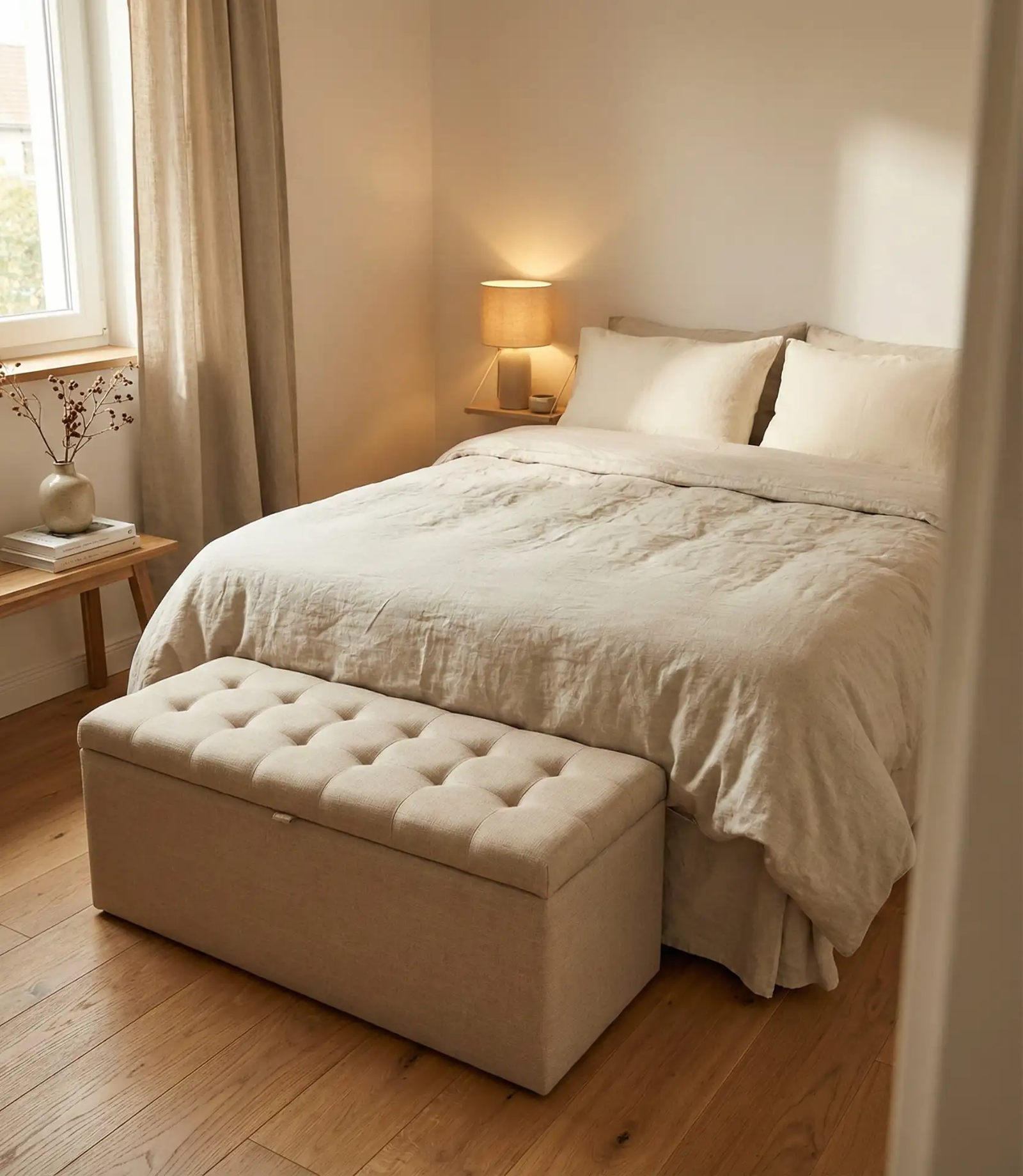
35 Small Bedroom Makeover Ideas to maximize every square foot
Small bedroom layouts are dominating Pinterest searches in 2026 as renters, new homeowners, and urban couples look for ways to maximize tight spaces. Whether you’re in a Brooklyn studio or a cozy Phoenix starter home, the goal is the same: fitting what you need without feeling boxed in. With clever furniture placement and innovative storage hacks, you can transform a cramped room into a stylish, highly functional sanctuary.
1. Floating Desk and Murphy Bed Combo
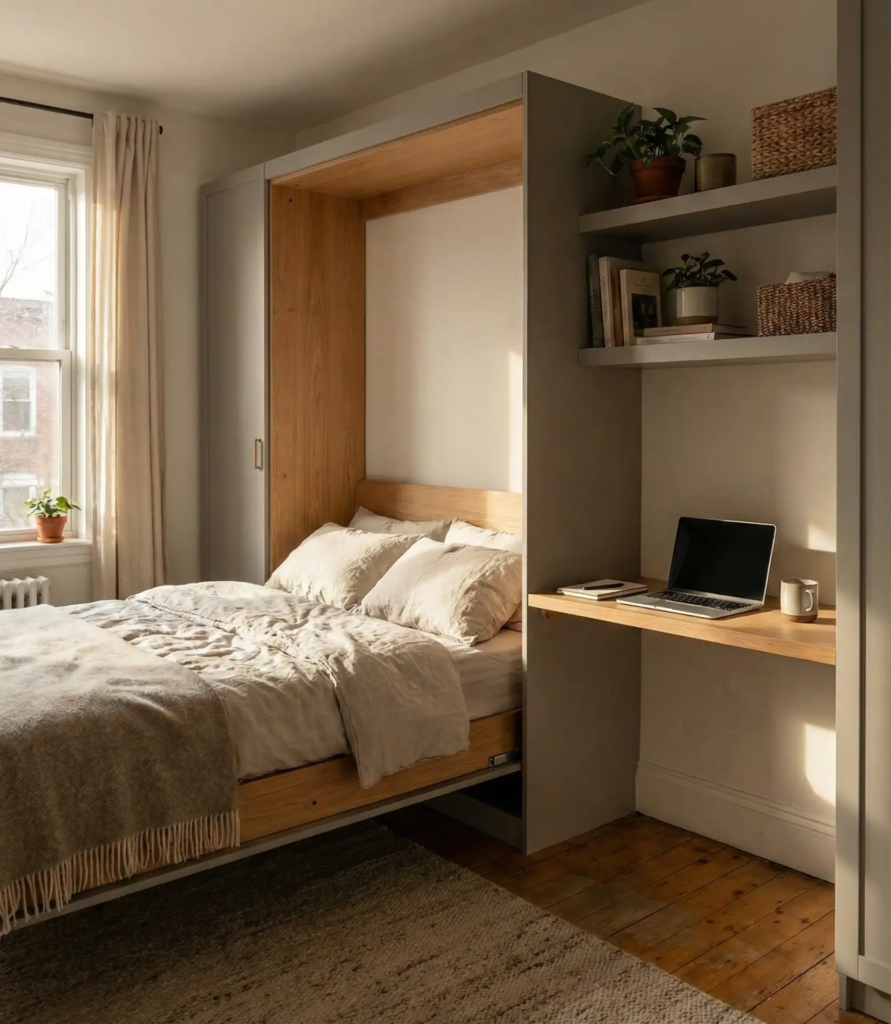
Perfect for studio apartments or tight bedrooms, this layout seamlessly shifts from work mode to rest mode without eating up floor space. By pairing a wall-mounted Murphy bed with a sleek floating desk spanning the wall, you create an intentional, dual-purpose home office rather than a makeshift corner.
Essential Buyer Tips:
- Prioritize Easy Lifting: Avoid heavy, cumbersome frames. Opt for piston lifts or spring mechanisms for effortless daily operation.
- Watch the Glare: Keep the desk away from direct sunlight to prevent harsh screen glare during remote work hours.
- Climate Considerations: If you live in a highly humid environment, verify that the bed’s metal hardware and lifting mechanisms are rust-resistant.
2. Queen Bed Against the Corner Wall
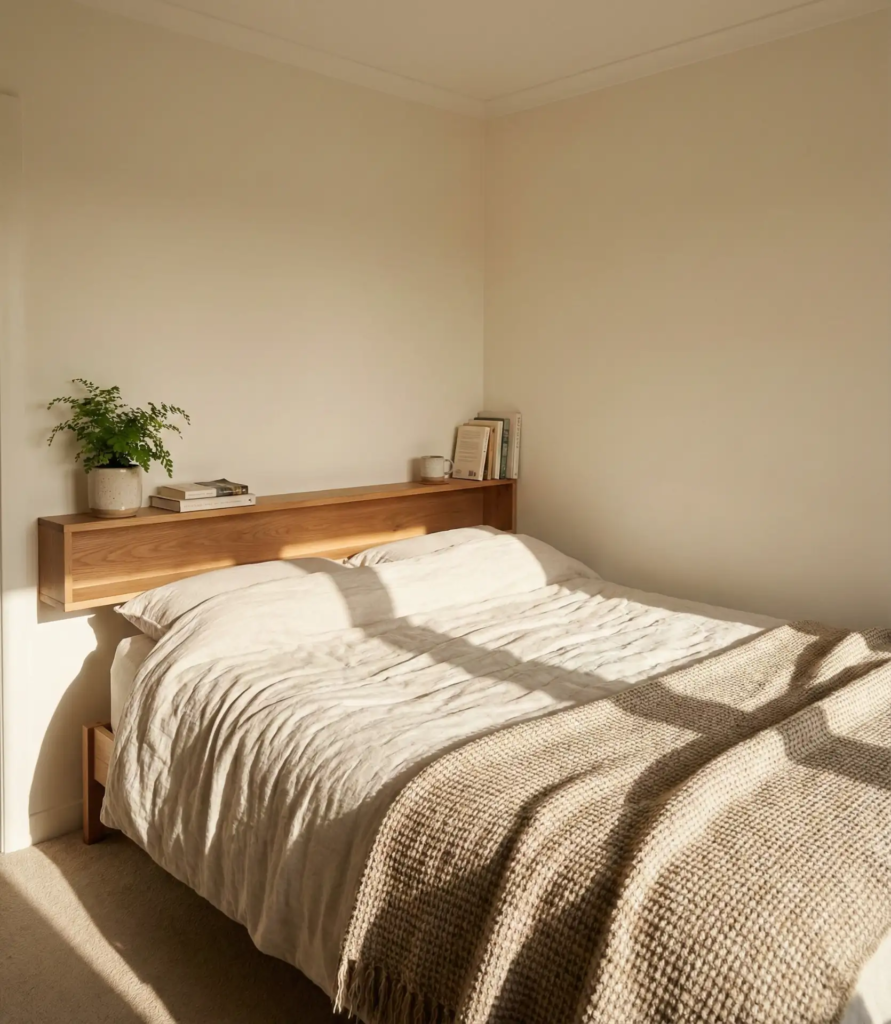
Tucking a queen bed into a corner rather than centering it instantly frees up crucial walkway space. This is a highly effective layout strategy, especially in narrow or uniquely shaped rooms frequently found in older architecture. The extra square footage can then accommodate a compact dresser, a reading nook, or a freestanding clothing rack.
Design & Comfort Hacks:
- Prevent Boxiness: Install floating shelves or wall-mounted sconces above the bed to keep the corner feeling open and visually engaging.
- Clearance is Key: If the bed is shared, ensure the person sleeping against the wall has at least 18 inches of clearance at the foot of the bed to slip in and out comfortably.
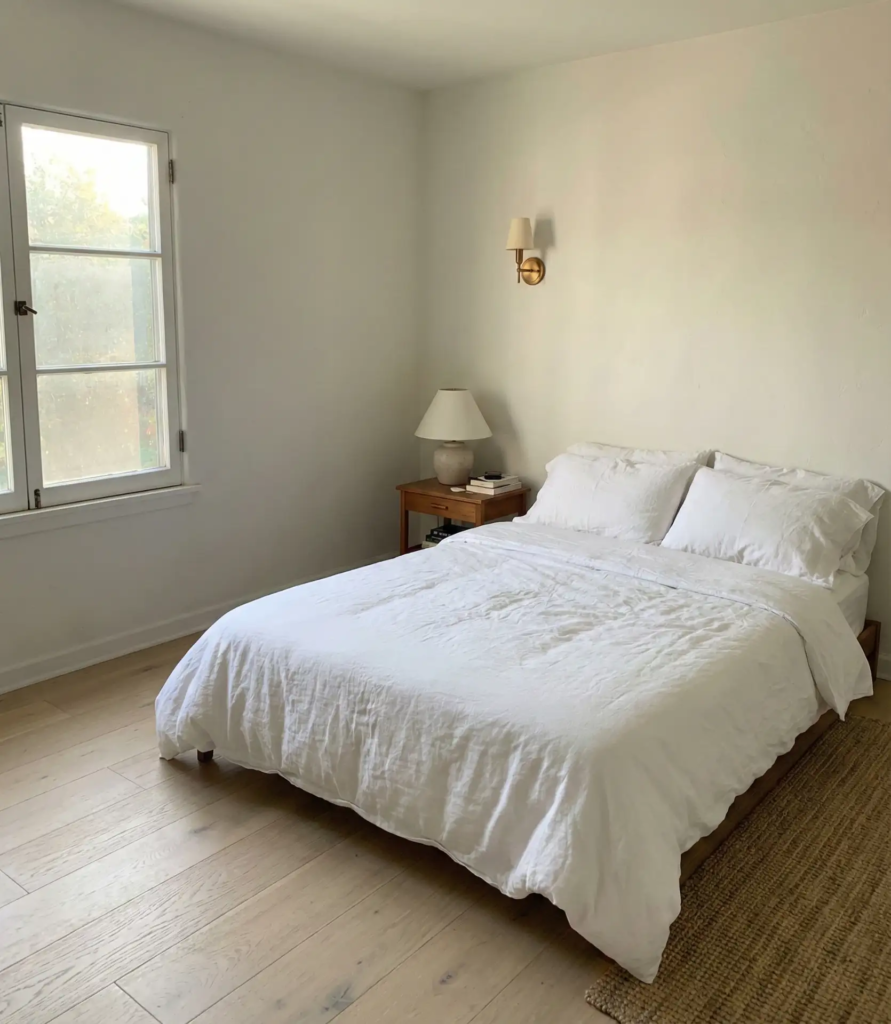
3. Under-Bed Drawer Storage with Full-Size Frame
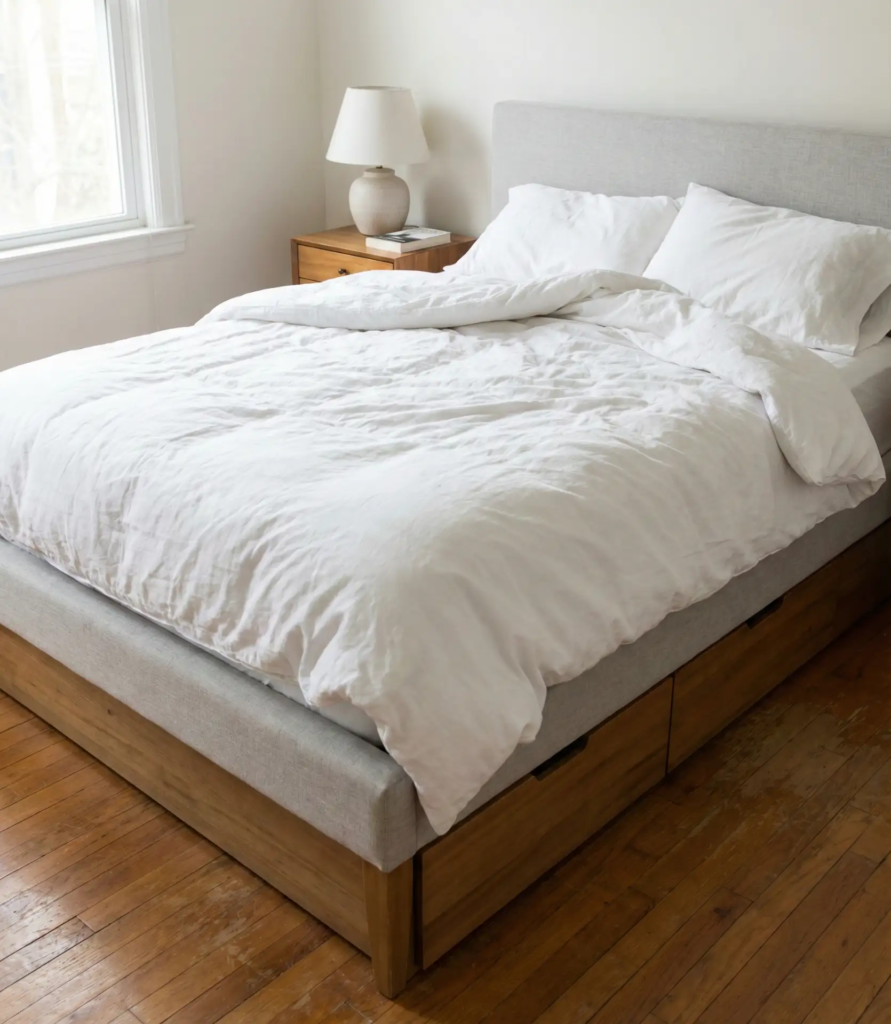
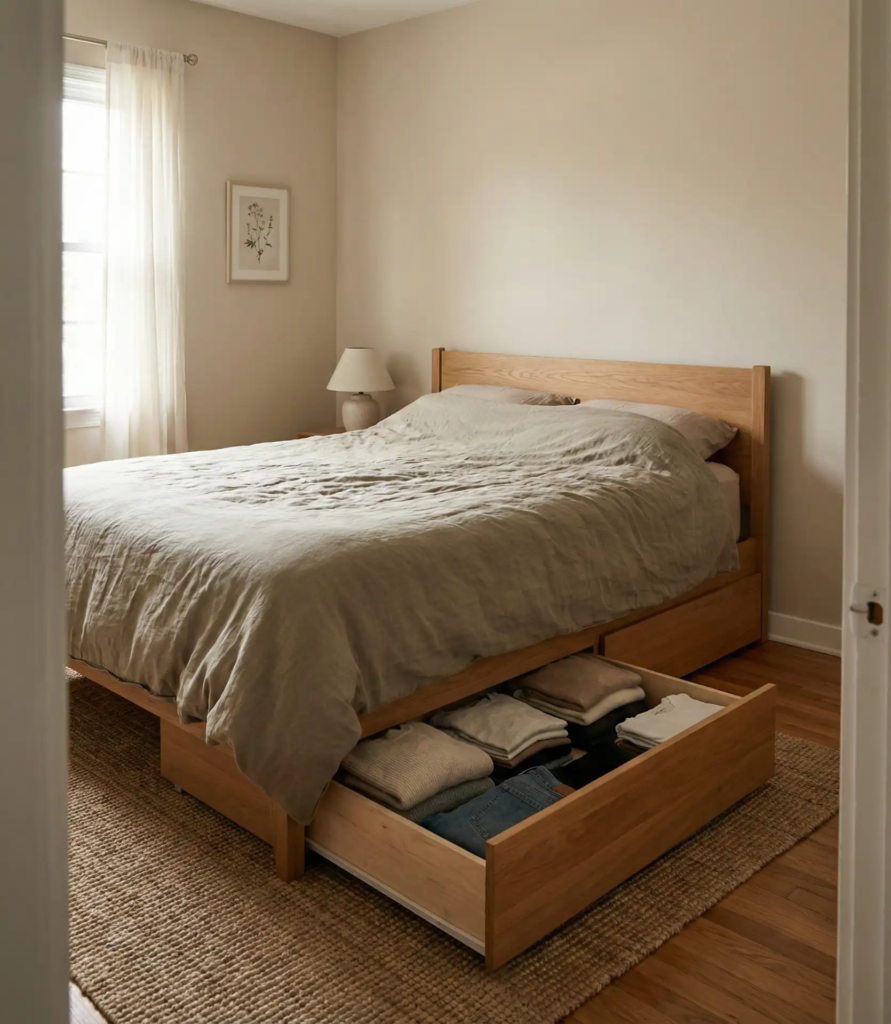
If your room is under 120 square feet, swapping a traditional frame for a full-size storage bed is one of the smartest space-saving investments available. By utilizing the four to six drawers tucked underneath, you gain closet-level capacity for off-season wardrobes, shoes, or bulky bedding—completely eliminating the need for a space-hogging dresser.
What to Know Before You Buy:
- Pricing Expectations: Reliable entry-level frames start around $400, while premium models featuring soft-close hinges average closer to $800.
- Verify the Specs: Always check drawer depth when shopping online to ensure they are practical for clothing, not just thin linens.
- Mind Your Ceilings: Storage beds sit considerably higher than standard frames. Measure your ceiling height first to avoid making the room feel vertically cramped.
4. Dual Nightstands for Couples in Narrow Rooms
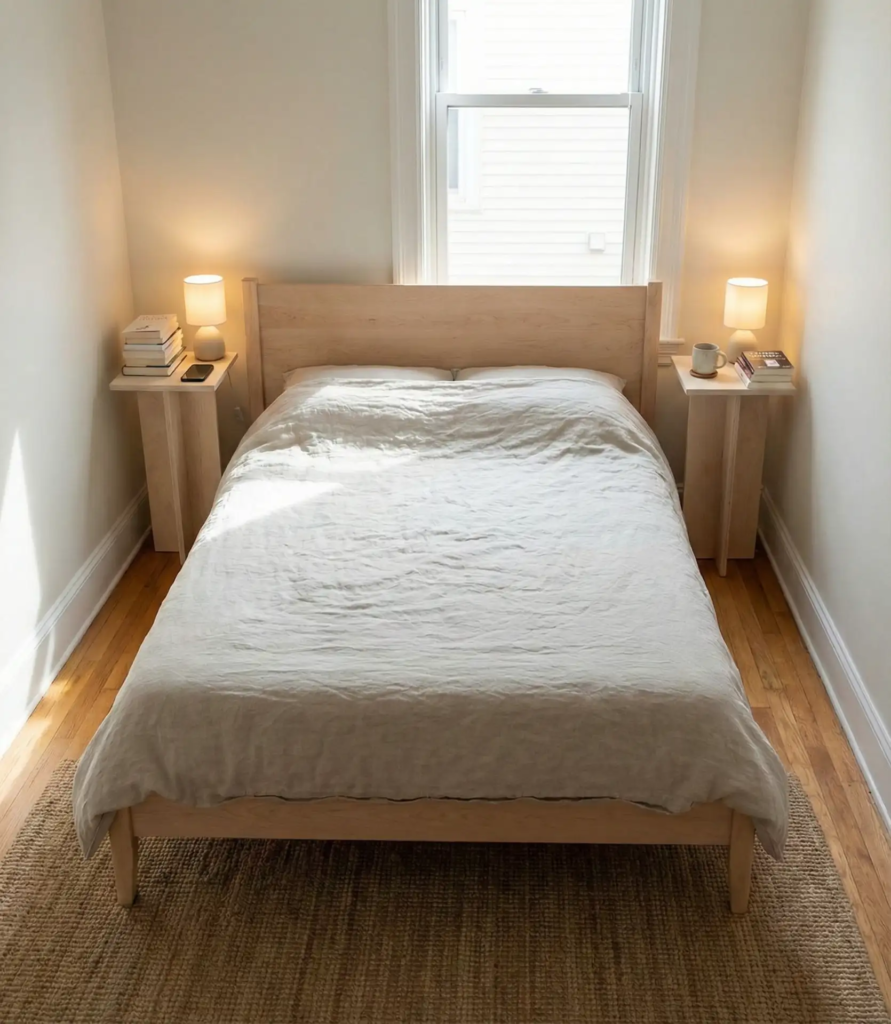
You don’t have to sacrifice symmetry just because space is tight. Couples can still enjoy dual nightstands by opting for wall-mounted floating shelves or ultra-narrow pedestal tables. By skipping bulky, multi-drawer units and choosing profiles that are 12 inches deep or less, you keep daily essentials—like phone chargers and glasses—accessible without choking up your walkways.
Design & Comfort Hacks:
- Match the Mattress: To keep reaching over feeling natural and comfortable, ensure the top of the nightstand sits flush with the top of your mattress.
- Think Minimal: Narrow furniture prevents the room from feeling like a cramped hallway, a crucial trick for urban condo living.
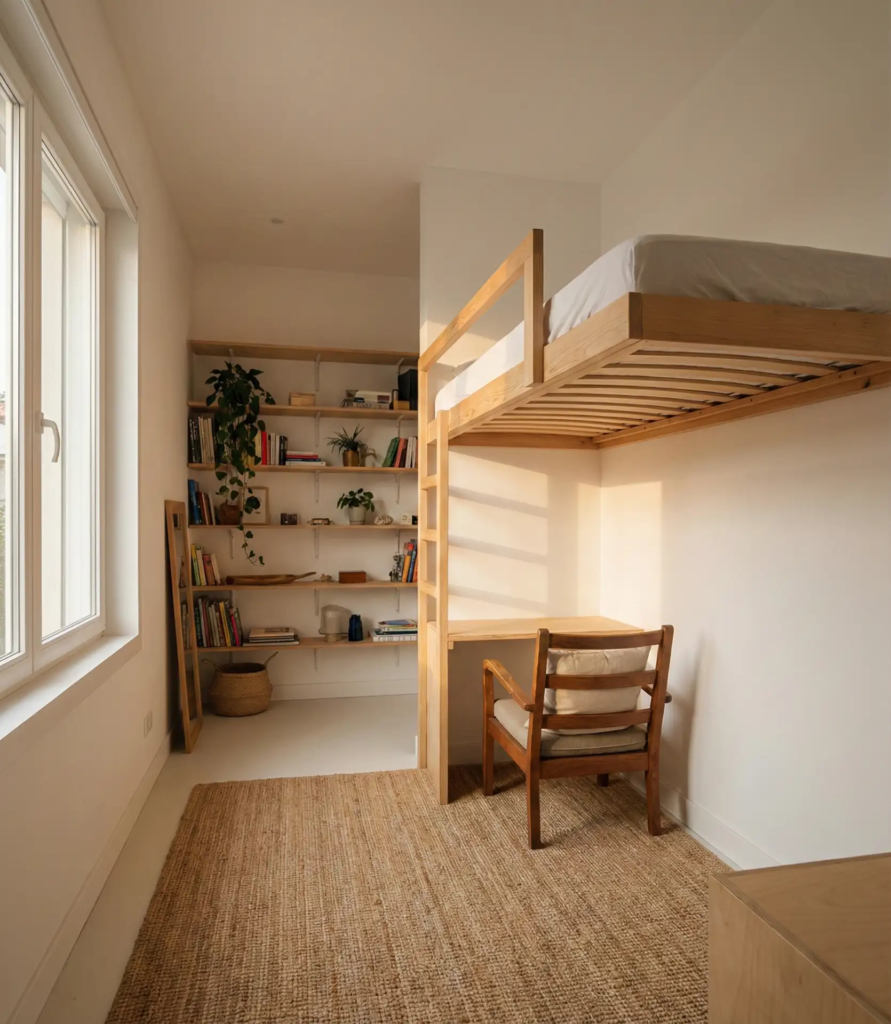
5. Lofted Bed with Desk and Dresser Below
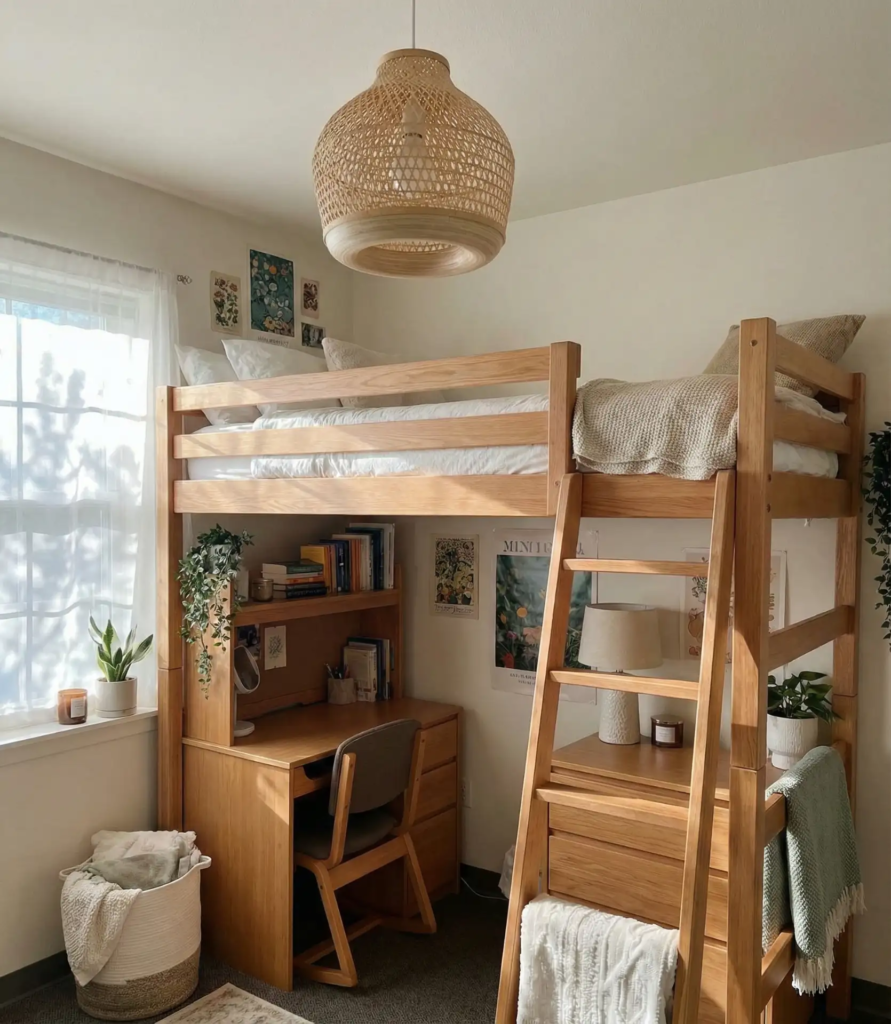
When you need a single room to act as a bedroom, office, and lounge, going vertical is the ultimate space hack. Lofting the bed reclaims its entire square footage on the floor, allowing you to tuck a workspace, dresser, or seating area directly underneath.
What to Know Before You Buy:
- Ceiling Requirements: This layout requires a minimum ceiling height of 9 feet to prevent the sleeping area from feeling claustrophobic.
- Prioritize Safety: Never skimp on the ladder. Flimsy ladders become major safety hazards in the middle of the night, so ensure yours is highly sturdy and easy to navigate.
6. Platform Bed with Side Storage Cubbies
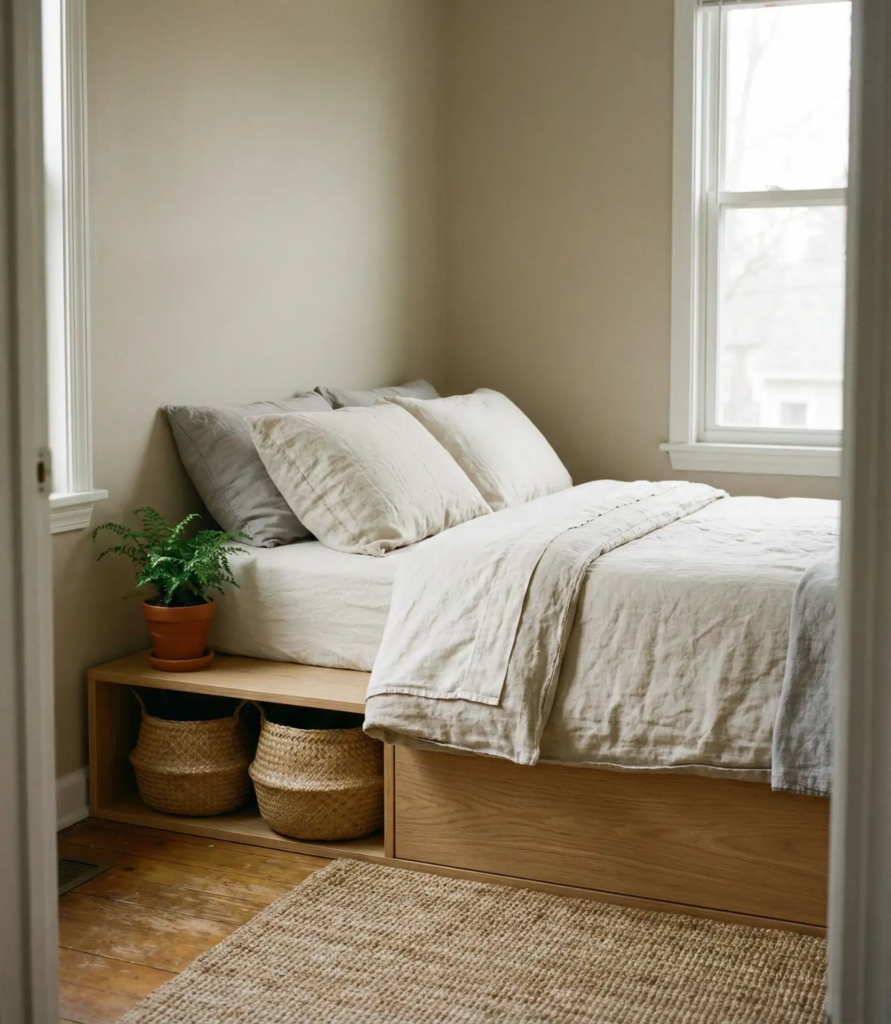
For a streamlined, modern look that fits perfectly with Scandinavian-inspired decor, choose a platform bed with built-in open cubbies. This eliminates the need for bulky dressers while keeping books, storage baskets, or folded clothes visible and easily accessible.
Investment & Material Tips:
- Budgeting: Expect to spend between $500 and $1,200, depending on the materials.
- Avoid Particleboard: If you live in a highly humid climate, invest in solid wood. Particleboard frames are notorious for sagging and warping over time when exposed to moisture.
7. Wall-Mounted TV with Floating Media Console
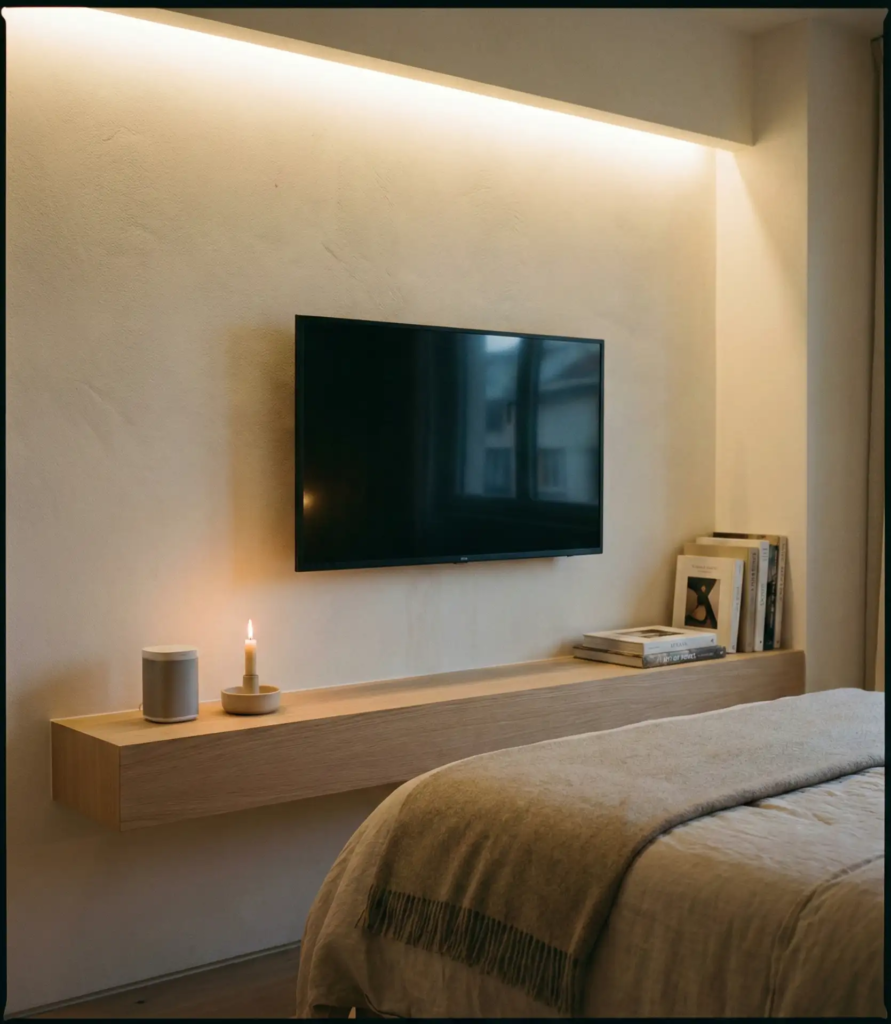
Turn your bedroom into a sleek relaxation zone by mounting your TV and pairing it with a narrow, floating console. This provides a drop zone for streaming devices or decorative items without eating up the floor space a traditional media cabinet demands.
Installation Advice:
- Watch the Height: The most common mistake is mounting the TV too high. The center of the screen should sit perfectly at eye level when you are resting on the bed.
- Renter-Friendly Solutions: If you can’t drill into the walls, use heavy-duty damage-free mounts or a tension pole system. Always use cord covers to keep the setup looking polished.
8. Bed Centered with Symmetrical Nightstands
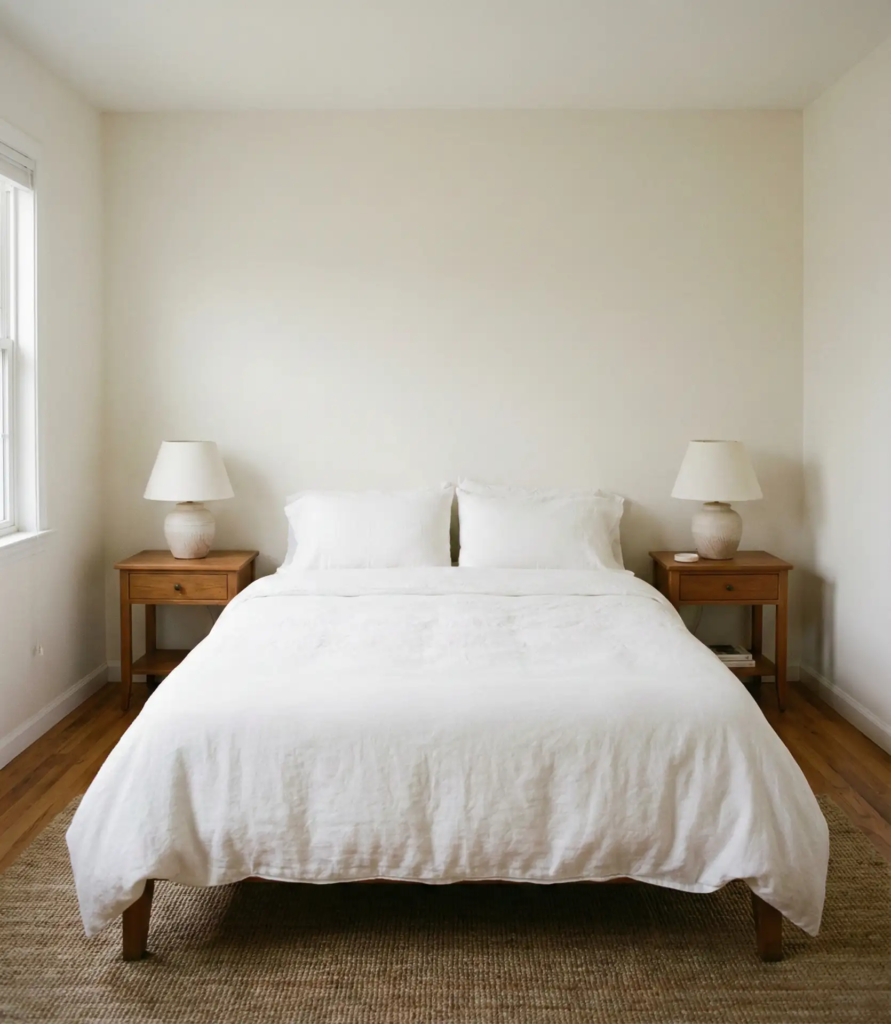
If your room is perfectly (or nearly) square, centering a queen bed with identical nightstands on either side creates a balanced, tranquil, hotel-like aesthetic. This classic layout designates the bed as the undisputed focal point, making it perfect for couples who want equal access and a cohesive design.
Space Guidelines:
- Clearance Rules: You need at least 24 inches of walking space on each side of the bed for this to feel comfortable.
- Know When to Downsize: If your room is narrower than 10 feet wide, you will likely need to downgrade to a full-size bed or eliminate one nightstand to prevent the room from feeling suffocating.
9. King Bed in a Compact Room with Minimal Furniture
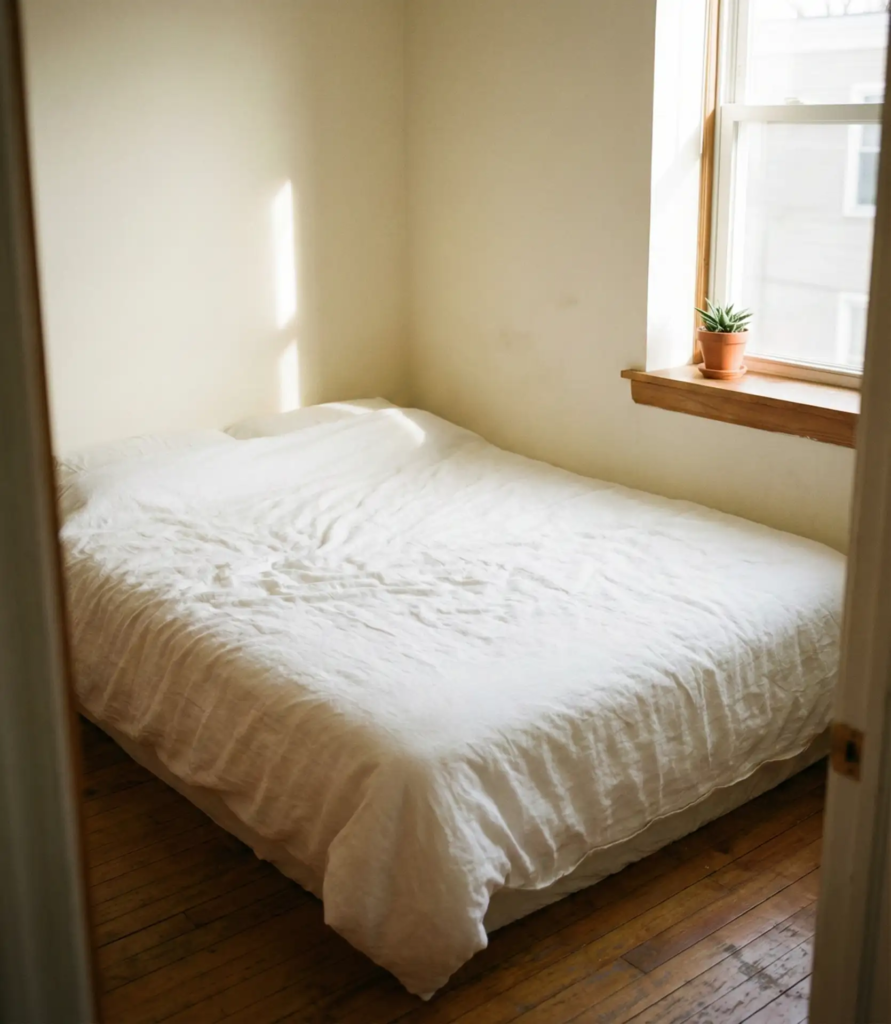
Yes, you can fit a king-size bed into a small room—but it requires sacrificing almost all other furniture. In this bold layout, the bed commands the entire space, and you must rely entirely on under-bed drawers, floating shelves, and wall-mounted storage for your belongings.
Is it right for you?
- The Ideal Candidate: This is strictly for those who want a dedicated sleep sanctuary and don’t need a bedroom desk, vanity, or seating area.
- Minimum Dimensions: Your room must be at least 11 by 11 feet to pull this off, ensuring you maintain an absolute minimum clearance of 18 inches around the sides and foot of the bed.
10. Closet System with Built-In Dresser
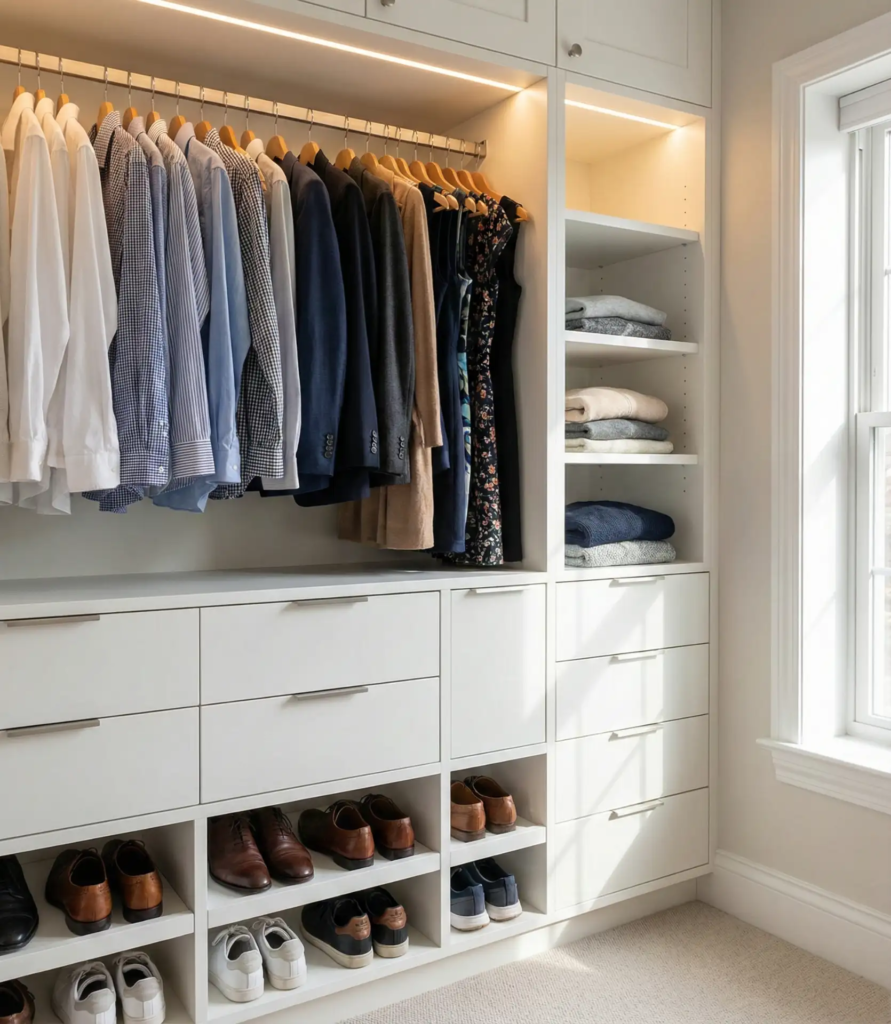
Moving your dresser into the closet is a brilliant way to reclaim precious floor space. By customizing a built-in system with drawers, hanging rods, and cubbies, you consolidate all your clothing storage into one vertical zone, leaving more room in the main bedroom for a desk or lounge chair.
Investment & Planning Tips:
- Budgeting: Custom systems run between $1,000 and $5,000, but handy DIYers can utilize solid mid-range kits like IKEA’s PAX series or options from The Container Store.
- Climate Tip: If you live in a humid environment, prioritize slatted shelves or well-ventilated systems to prevent trapped moisture and mildew.
11. Daybed with Trundle for Guest Flexibility
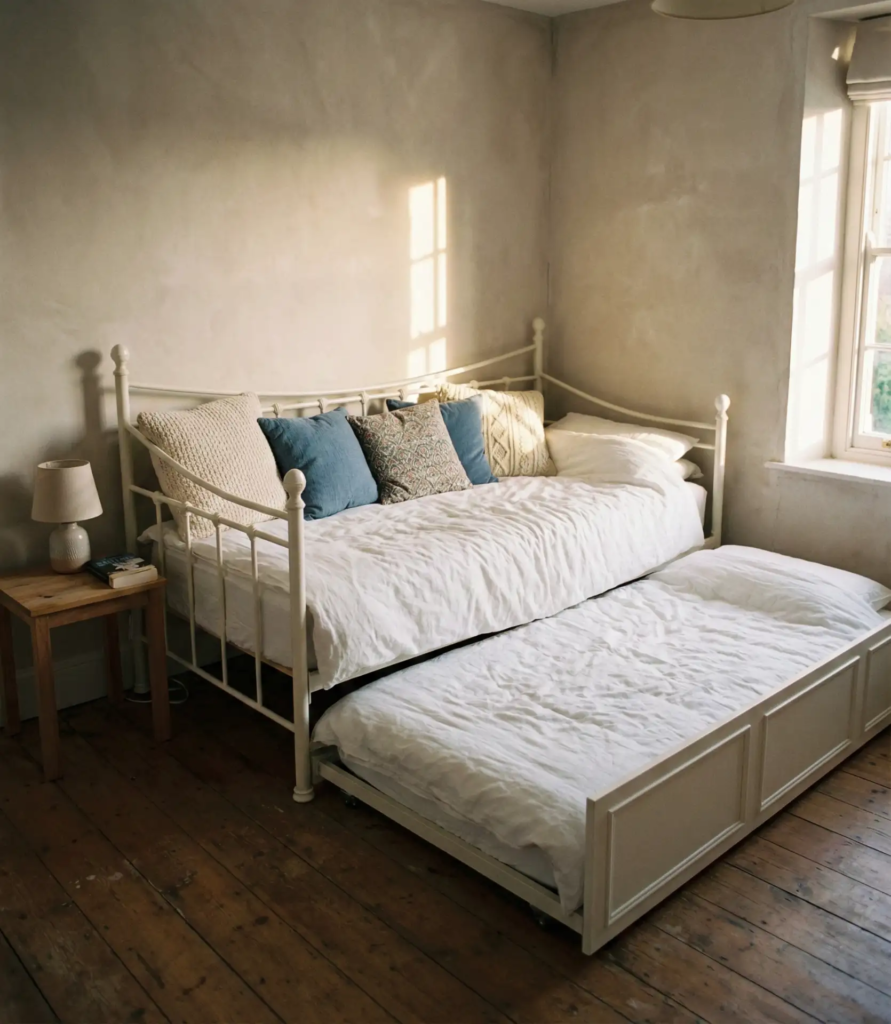
For studio apartments or rooms that must double as a home office and a guest space, a daybed is the ultimate chameleon. It acts as a stylish sofa or reading nook during the day, while the hidden trundle pulls out to provide a comfortable sleeping surface at night.
Design & Comfort Hacks:
- Adult-Approved Design: Modern daybeds featuring sleek metal frames or sophisticated upholstery look completely at home in adult spaces—they aren’t just for kids’ rooms anymore.
- Mattress Quality Matters: Don’t skimp on the trundle mattress; avoid thin, camping-style pads if you want your overnight guests to actually get a good night’s rest.
12. Corner Desk with Overhead Shelving
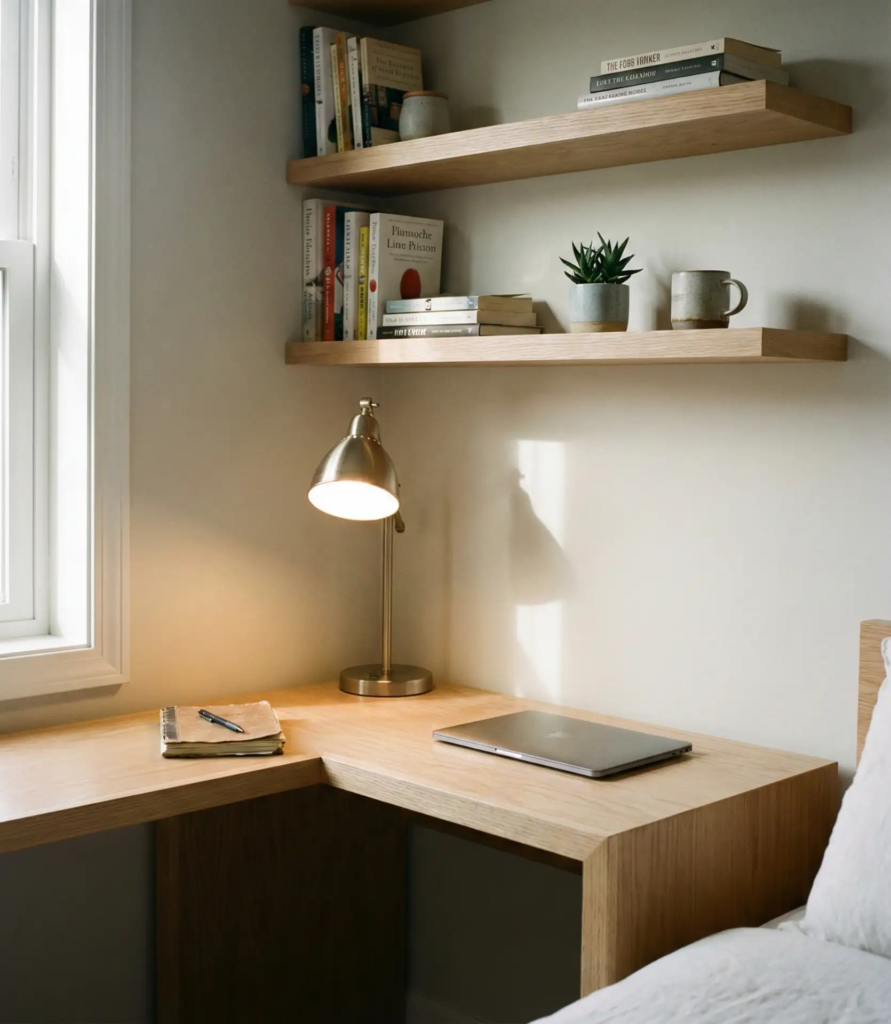
Carve out a dedicated workspace without dominating an entire wall by tucking a compact desk into a corner and stacking floating shelves above it. This strategy keeps your home office supplies visually contained and clearly separated from your relaxing sleep zone.
Setup Advice:
- Ideal Placement: This layout works best where two adjoining blank walls meet, away from doors.
- Lighting Strategy: To flatter yourself on video calls and reduce screen glare, position the desk so that natural light from a window hits you from the side, rather than directly in front of or behind you.
13. Sliding Barn Door for Closet Access
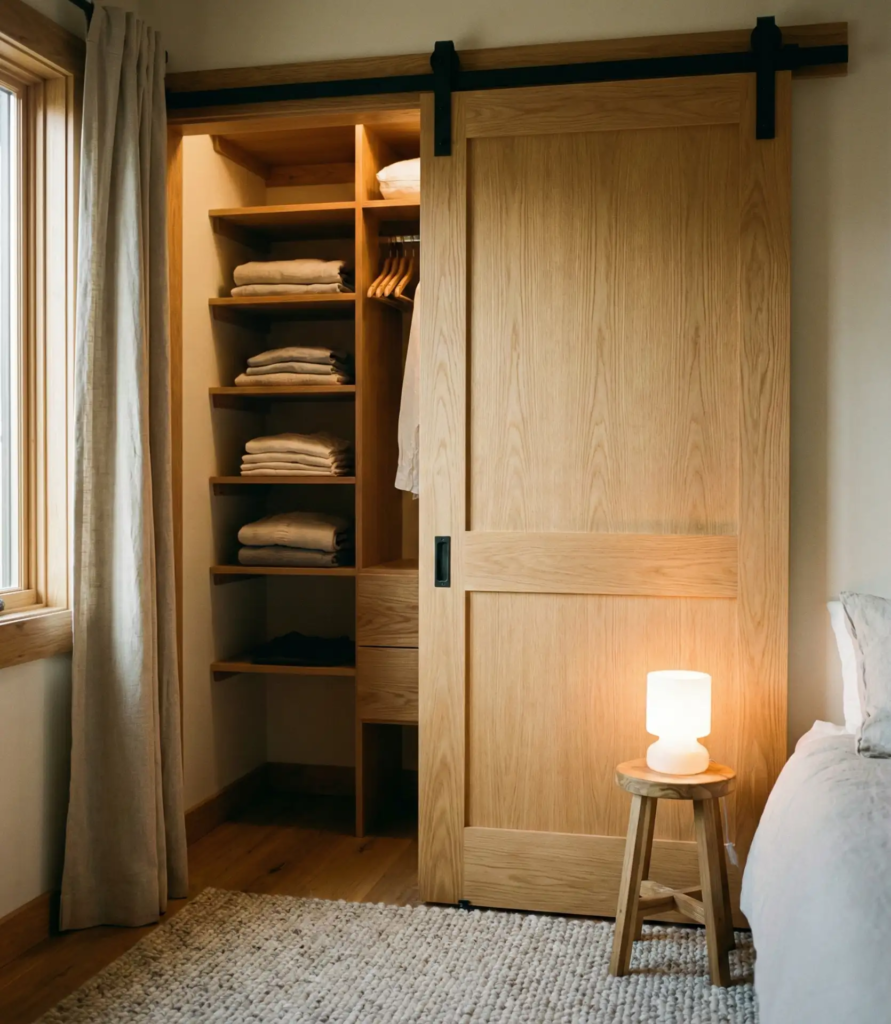
Swapping a traditional hinged bedroom or closet door for a sliding barn door can instantly recover 10 to 15 square feet of usable space. Because they slide flat against the wall rather than swinging outward, you can place furniture much closer to the entryway without blocking access.
What to Know Before Installing:
- Affordable Upgrades: Hardware kits start around $150 and are relatively easy to install for the average DIYer.
- The Trade-off: Barn doors don’t seal as tightly as standard doors. If light, noise, or dust sensitivity is an issue, consider installing a draft stopper along the bottom edge.
14. Double Bed with Wall-Mounted Nightstand
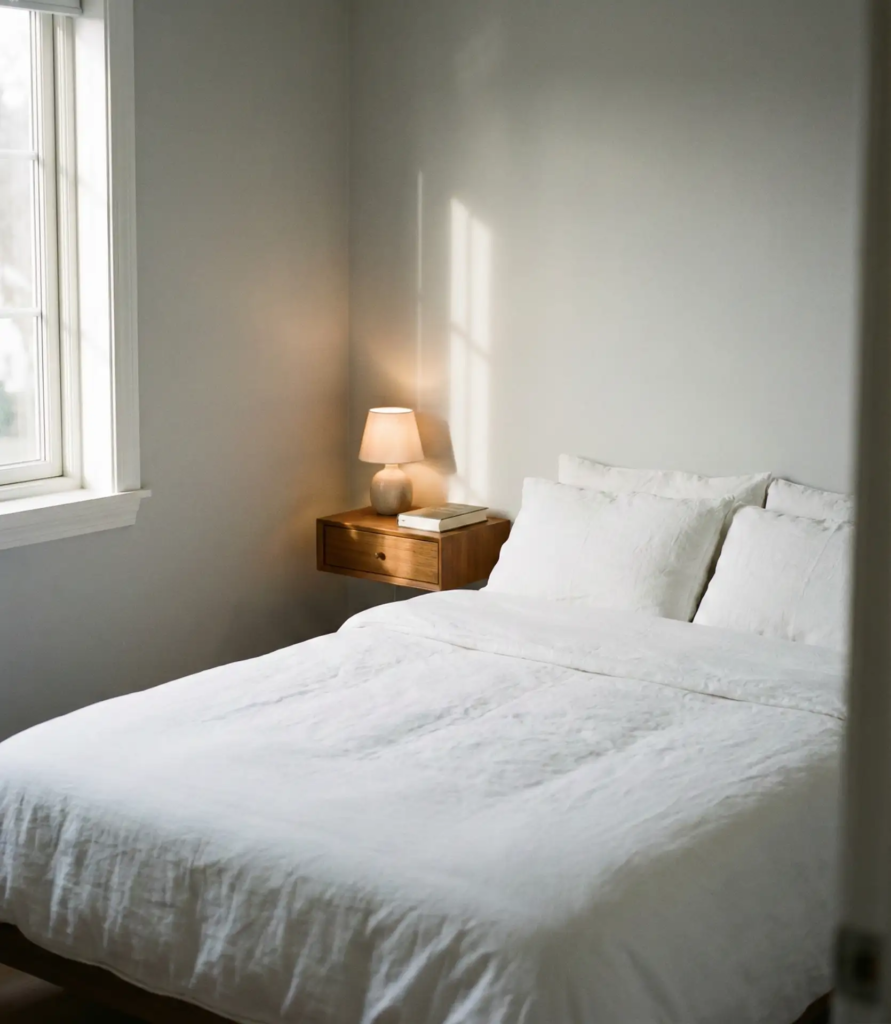
Pairing a double bed with floating, wall-mounted nightstands keeps your floor completely clear, maximizing the visual openness of the room. Without legs or bulky bases taking up square footage, these sleek shelves (available in wood, metal, or acrylic) are a minimalist’s dream—and a breeze to clean under.
Installation Rules:
- Nailing the Height: Avoid mounting them too high; aim for them to be perfectly flush with (or slightly below) the top of your mattress.
- Renter & Safety Solutions: Renters can use heavy-duty adhesive strips rated for the shelf’s weight, while those in earthquake-prone areas like California should avoid displaying fragile items and use securing straps.
15. Wardrobe Closet Instead of Built-In
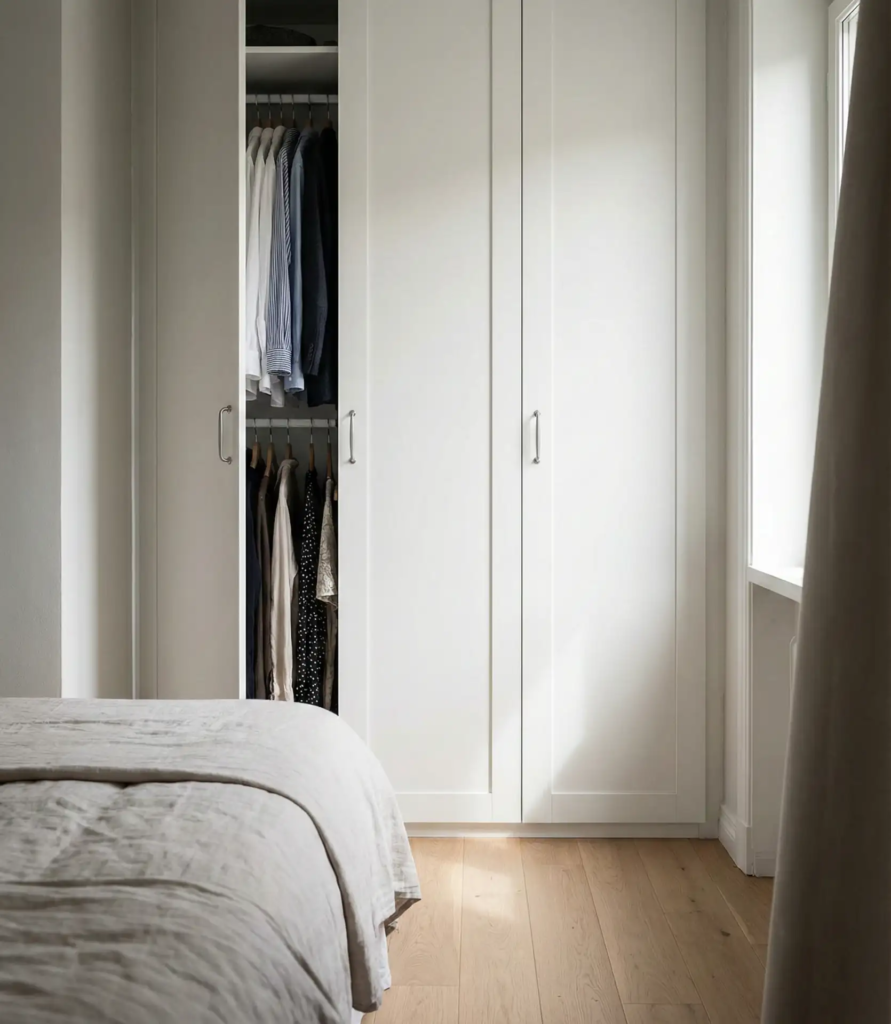
No built-in closet? A sleek, modern freestanding wardrobe offers ample hanging and folding storage without requiring permanent construction. It’s an ideal, space-saving solution for renters, converted attics, or older homes that completely lack traditional closet space.
Buying Guidelines:
- Investment vs. Longevity: Prices range from $200 to $1,500. While particleboard is budget-friendly, investing in solid wood or plywood is highly recommended if you move frequently to prevent wobbling and warping.
- Safety First: Regardless of the material, always anchor tall wardrobes to the wall to prevent tipping, especially if you have children or pets in the home.
16. Low-Profile Bed for a Spacious Feel
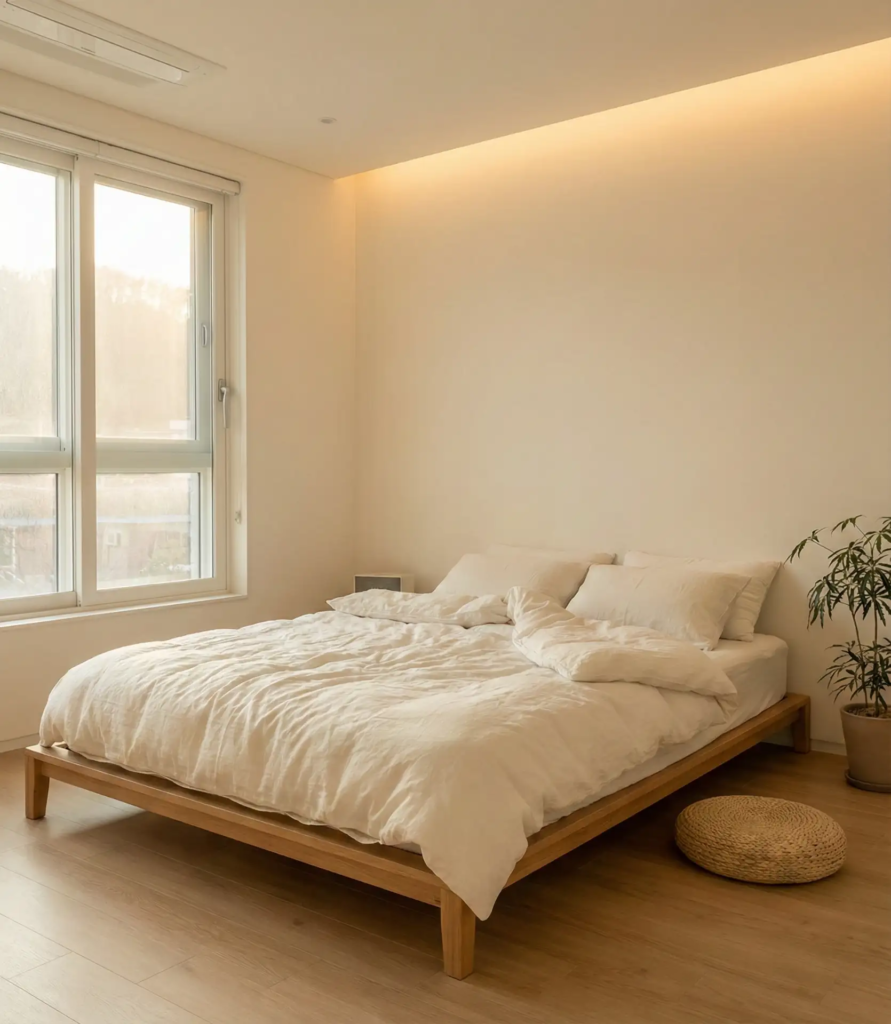
Sitting closer to the ground, a low-profile bed instantly tricks the eye into thinking a small bedroom is taller and less cramped. A staple of Japanese and Scandinavian minimalism, lowering the visual weight of your heaviest piece of furniture creates much-needed breathing room in the upper half of the space.
What to Consider:
- Mobility Factors: While visually appealing, low beds can be difficult to get in and out of for older adults or anyone with joint or balance issues.
- Storage Trade-offs: You will sacrifice under-bed storage space, so ensure you have alternative organizational systems in place.
17. Headboard with Built-In Shelving
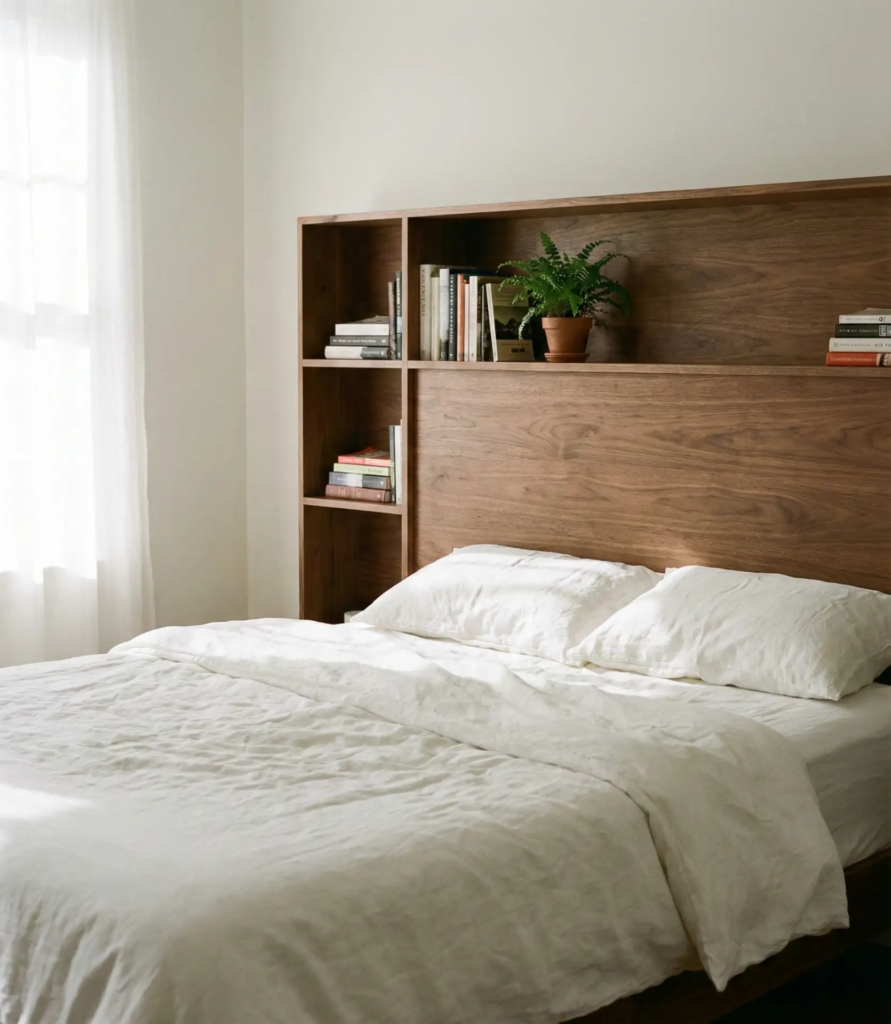
If you want nightstand-level convenience without sacrificing an inch of floor space, a headboard with built-in shelves or cubbies is a game-changer. You can keep books, glasses, phones, or small plants within arm’s reach while maintaining a clean, symmetrical look. This is highly effective in layouts where traditional nightstands would block a window or door.
Investment & Design Tips:
- Budgeting: Ready-made storage headboards start around $300, though you can easily DIY a custom version using IKEA bookcases and brackets.
- Keep it Shallow: Ensure the shelves are shallow enough that items won’t tumble onto the mattress when you adjust your pillows at night.
18. Mirror Closet Doors to Expand the Space
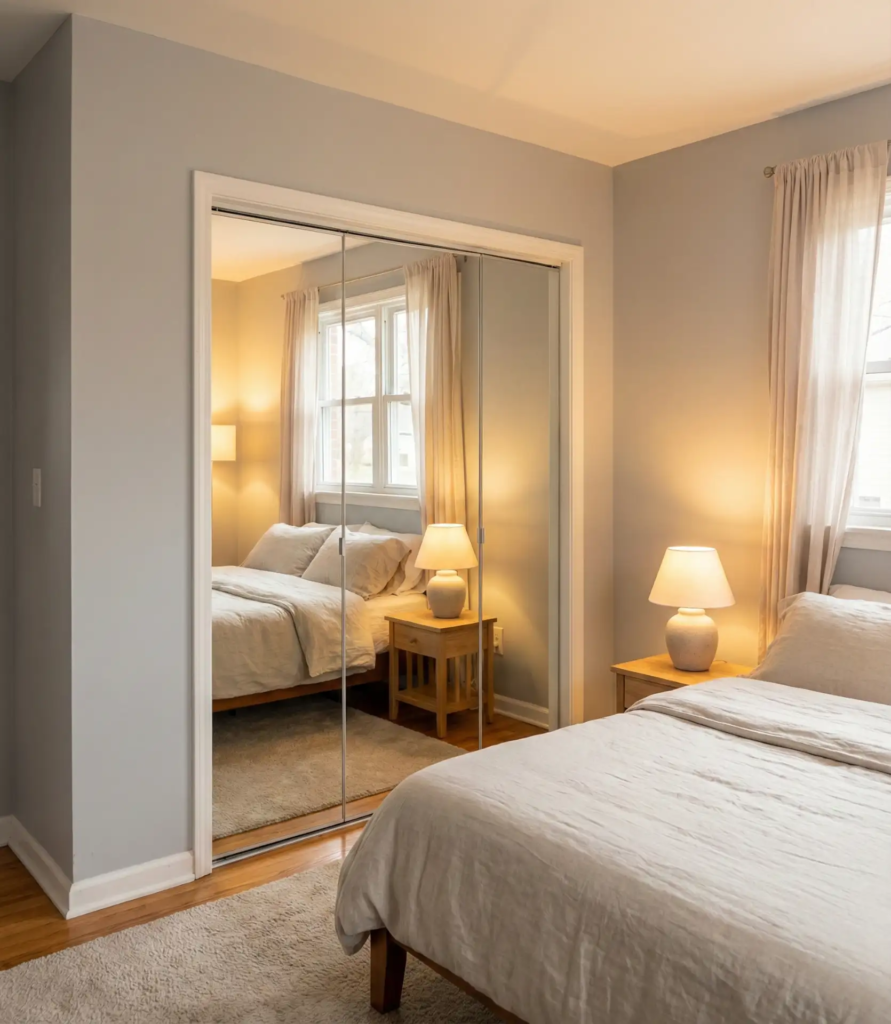
Installing mirrored sliding doors on your closet is one of the oldest—and most effective—design tricks in the book. By reflecting light and doubling the room’s visual depth, mirrors create the instant illusion of a much larger space. This also eliminates the need for a separate full-length mirror, freeing up valuable wall space for art or furniture.
Installation Advice:
- Cost Expectations: Depending on the size and hardware quality, installation ranges from $300 to $1,000.
- Maintenance & Aesthetics: They require frequent cleaning to banish smudges. If you don’t love constantly seeing your reflection, opt for frosted or tinted mirror panels instead.
19. Ottoman with Hidden Storage at Foot of Bed
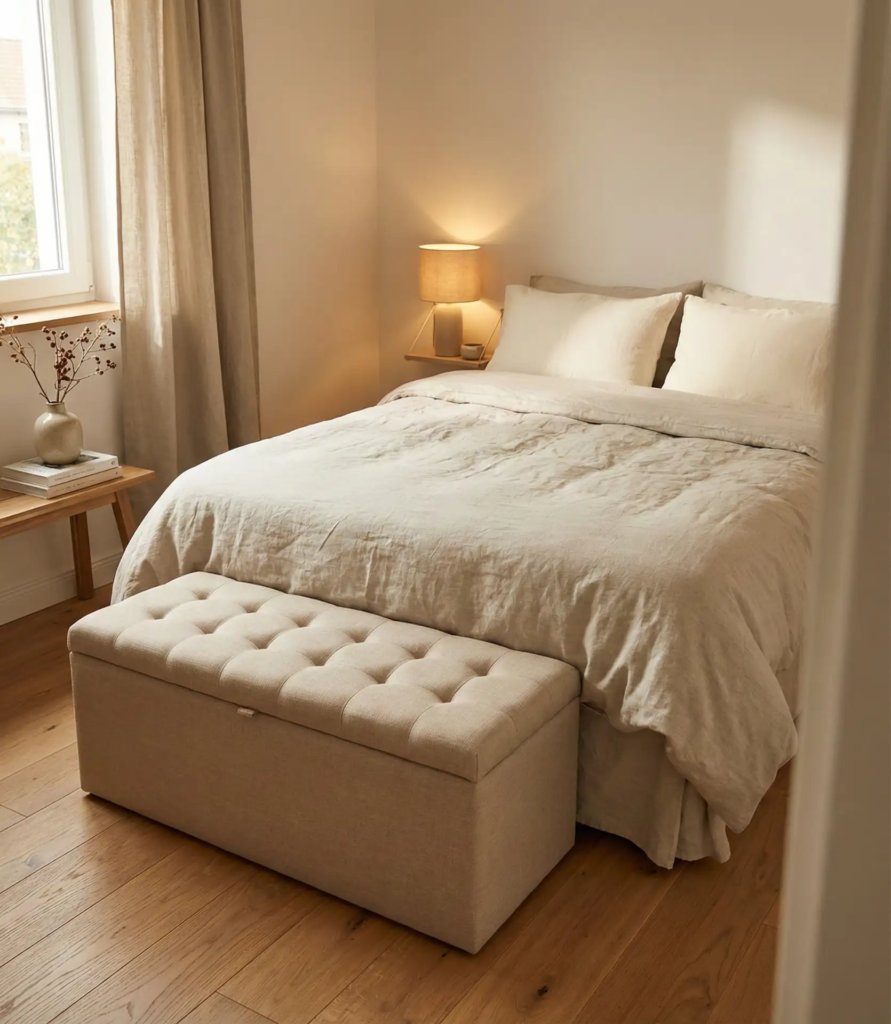
When floor space is at a premium, furniture must multitask. A storage ottoman placed at the foot of the bed acts as seating, a surface for folding laundry, and a hidden vault for extra blankets, pillows, or seasonal clothes. Because it maintains a low profile, it won’t obstruct your view or make the room feel heavy.
Buying Guidelines:
- Hardware Matters: Look for models with hinged lids rather than fully removable tops, making access much easier when you are in a rush.
- Fabric Choices: If you have kids or pets, prioritize wipeable, stain-resistant materials like faux leather or performance fabrics.
20. Bed Against Window with Blackout Curtains
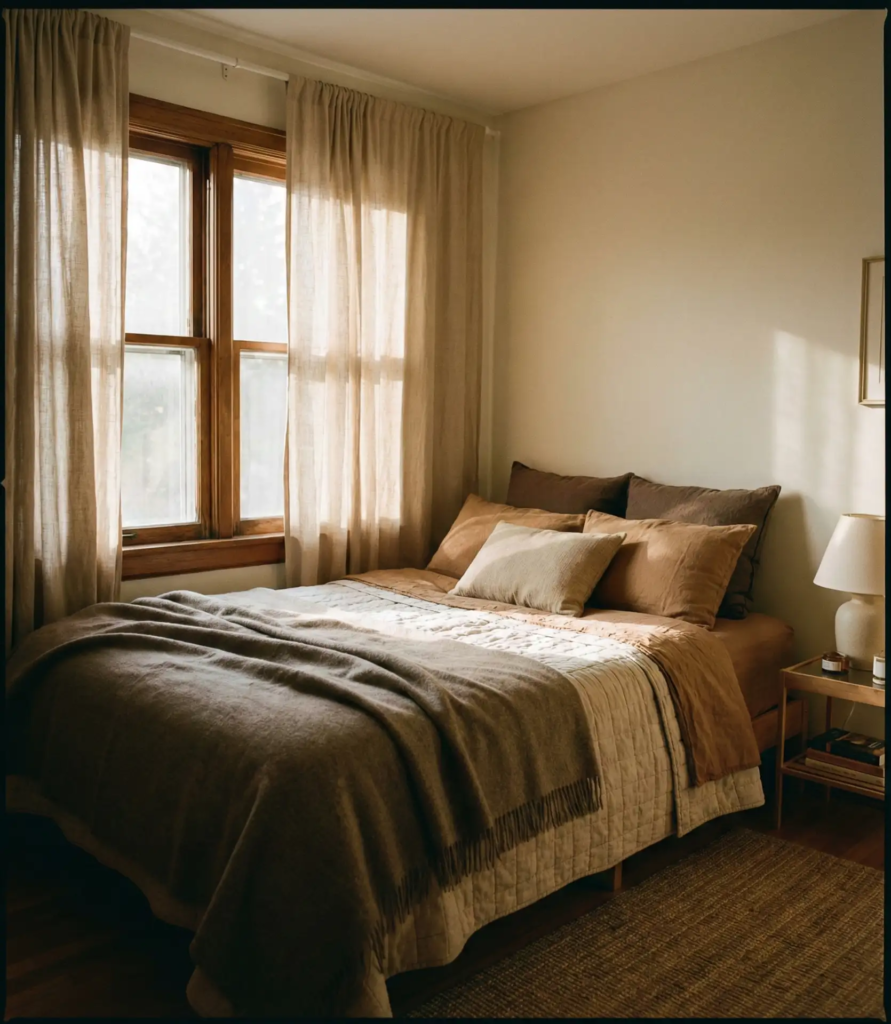
Sometimes, placing the bed directly under or against a window is the only logical layout. It is a common necessity in older homes with quirky floor plans or tight studio apartments. By utilizing high-quality blackout curtains, you can easily control the light, temperature, and privacy of your sleep zone.
Climate Hacks:
- Heat Control: If you live in a scorching climate, thermal-backed curtains are essential to block heat transfer.
- Cold Control: In freezing winter regions, place a draft snake along the window sill to prevent icy air from seeping in overnight. Always ensure the window can still open for fresh air ventilation.
21. Tall Dresser Instead of Wide
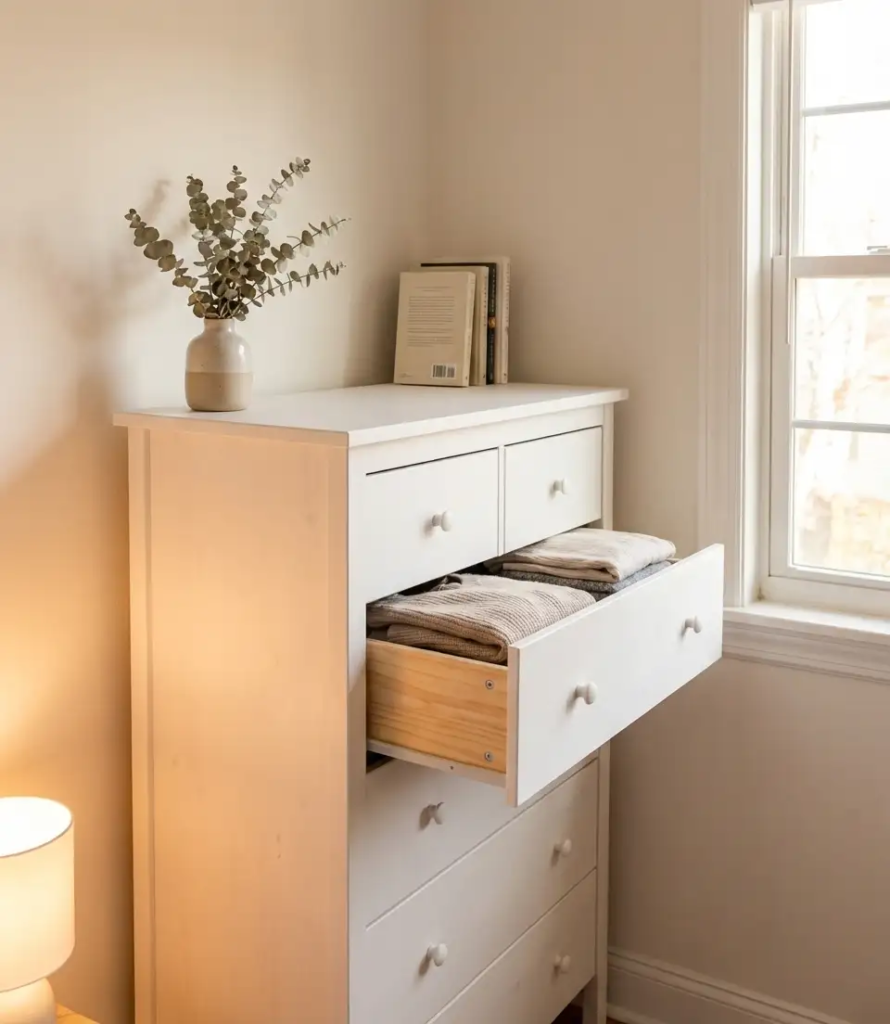
Going vertical is the ultimate space-saving strategy. A tall dresser with five or six drawers takes up a fraction of the floor footprint of a wide, low dresser while offering the exact same storage capacity. Not only does it leave room for a desk or nightstand, but it also draws the eye upward, making the ceiling feel higher.
Safety & Material Tips:
- Solid vs. Particleboard: Solid wood dressers (ranging up to $1,200) are highly stable but heavy, while particleboard options (starting around $250) are lightweight and budget-friendly.
- Anchor Everything: Because tall dressers are top-heavy, you must anchor them securely to the wall to prevent tipping hazards.
22. Pegboard Wall for Vertical Storage
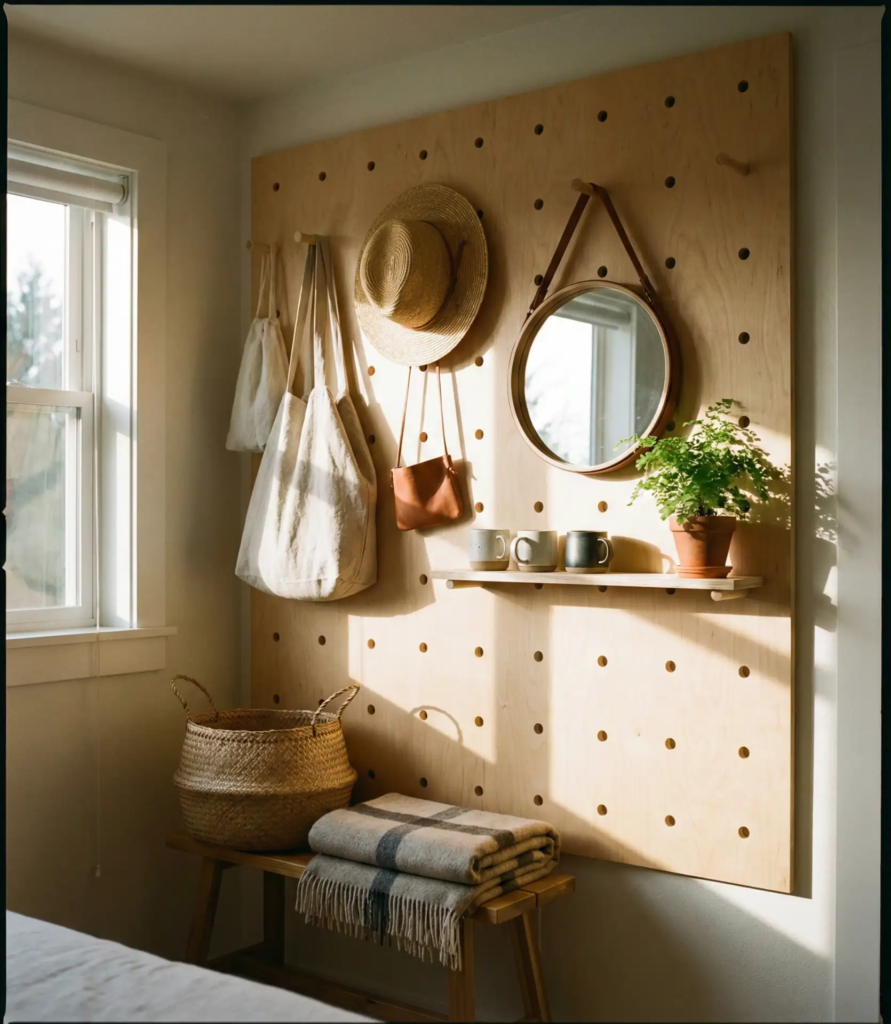
A pegboard wall provides highly flexible, vertical storage for everything from jewelry to office supplies and trailing plants. You can completely customize the arrangement of hooks and shelves as your needs evolve. Leave it raw for an industrial look, or paint it to seamlessly match your room’s color palette.
Setup Advice:
- Affordable Upgrades: Pegboard panels are incredibly cheap (usually $15 to $40) and easy to mount.
- Weight Limits: Use standoffs for a cool floating effect, but avoid hanging heavy items unless the pegboard is reinforced and mounted directly into the wall studs.
23. Folding Wall Desk for Occasional Use
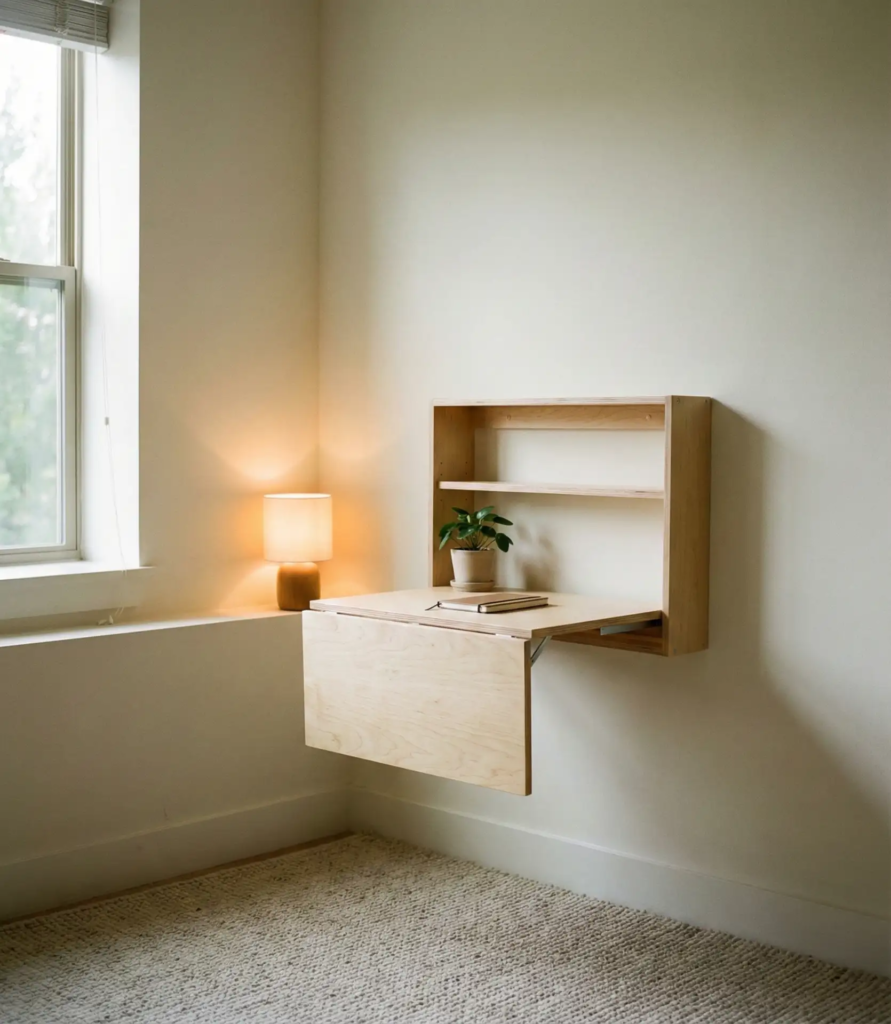
If you only need a desk occasionally, a wall-mounted folding desk is the perfect compromise. It drops down when you need to answer emails and folds completely flat against the wall when you’re done, preserving your floor space and keeping the room feeling like a bedroom, not a corporate office.
What to Know Before You Buy:
- Hardware Crucials: Look for desks featuring secure locking hinges to prevent accidental collapses.
- Mounting Requirements: You must mount this unit directly into wall studs, not just drywall—especially if you plan to lean on it or use heavy monitors.
24. Open Shelving for Display and Storage
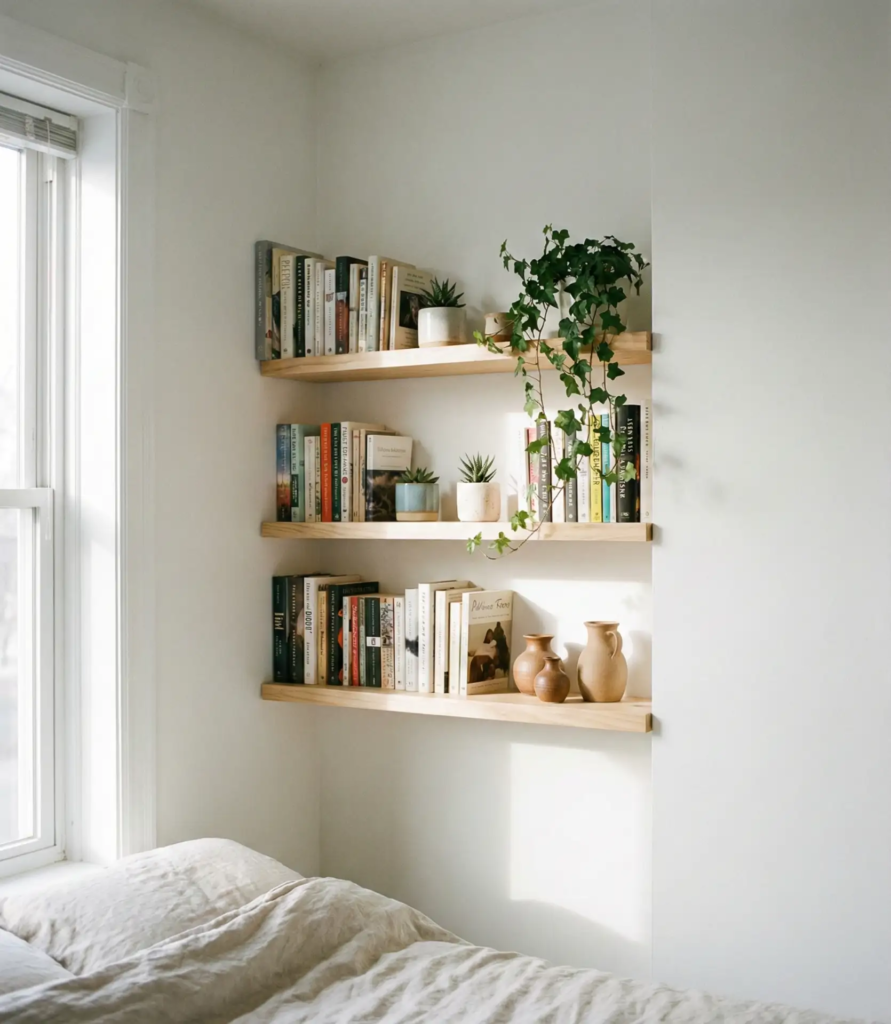
Mounting open shelving above a bed, desk, or dresser adds personality and storage without the imposing bulk of closed cabinetry. It’s an inexpensive way (often under $50 per shelf) to display books, plants, or curated decor while keeping the room feeling airy and open.
Styling Rules:
- Embrace Negative Space: The most common mistake is overstuffing the shelves, which instantly makes the room look cluttered. Keep it curated and leave empty space to let the items breathe.
- Dusting Duty: Be prepared to dust more frequently than you would with closed storage, especially if you have pets.
With the right layout, even the most compact bedroom can be transformed into a functional, highly stylish retreat. Whether you are battling awkward dimensions or a complete lack of closets, there is always a strategic solution to maximize what you have.